Monday: Warm up
Finish Nietzsche Readings
Discuss Readings/ Nietzsche Lecture
Begin “Full” Existentialism Lecture
Tuesday: Warm up
“Full” Existentialism Lecture
Wednesday: Warm up
Continue “Full” Existentialism Lecture (if needed)
Sartre Lecture with Biography
Sartre Reading “Existentialism is a Humanism”
Thursday: Warm up
Finish Sartre Reading, Discussions of questions
Camus Lecture
Friday: Reading-based Warm up on “The Myth of Sisyphus”
Kierkegaard and Religious Existentialism
“Abraham and Isaac” (reading from Genesis) and Ethics
31 January 2011


Schedule for the week of 1/31/11 to 2/4/11
Monday: Warm up
Finish Nietzsche Readings
Discuss Readings/ Nietzsche Lecture
Begin “Full” Existentialism Lecture
Tuesday: Warm up
“Full” Existentialism Lecture
Wednesday: Warm up
Continue “Full” Existentialism Lecture (if needed)
Sartre Lecture with Biography
Sartre Reading “Existentialism is a Humanism”
Thursday: Warm up
Finish Sartre Reading, Discussions of questions
Camus Lecture
Friday: Reading-based Warm up on “The Myth of Sisyphus”
Kierkegaard and Religious Existentialism
“Abraham and Isaac” (reading from Genesis) and Ethics
Finish Nietzsche Readings
Discuss Readings/ Nietzsche Lecture
Begin “Full” Existentialism Lecture
Tuesday: Warm up
“Full” Existentialism Lecture
Wednesday: Warm up
Continue “Full” Existentialism Lecture (if needed)
Sartre Lecture with Biography
Sartre Reading “Existentialism is a Humanism”
Thursday: Warm up
Finish Sartre Reading, Discussions of questions
Camus Lecture
Friday: Reading-based Warm up on “The Myth of Sisyphus”
Kierkegaard and Religious Existentialism
“Abraham and Isaac” (reading from Genesis) and Ethics
24 January 2011
Schedule for the week and blog post asssignment
Schedule of the Week of 1/24/201to 1/28/2011
Great Ideas
Monday: Finish The Bacchae Performances, Begin Protagonist film
Tuesday: Finish Protagonist film, In-class essay on The Bacchae (organizational structure)
Wednesday: In-class essay on The Bacchae (execution and peer editing)
Thursday: Marxism introduction (lecture) and readings, Introduction to “ideology”
Friday: Marxism continued and the application of a Marxian critical perspective
Great Ideas
Monday: Finish The Bacchae Performances, Begin Protagonist film
Tuesday: Finish Protagonist film, In-class essay on The Bacchae (organizational structure)
Wednesday: In-class essay on The Bacchae (execution and peer editing)
Thursday: Marxism introduction (lecture) and readings, Introduction to “ideology”
Friday: Marxism continued and the application of a Marxian critical perspective
Blog Post for the Week
Last week I asked you about masks, in the spirit of asking you to comment on a theme related to the content of the week's class work. This week we continue this trend and, as we are beginning a discussion of Marxism and Marxist criticism with its importance on an economic interpretation of the world, I ask you to tell me how the economic structure, especially the implicit understandings which define one's perspective of the world (one's "ideology"), affects your understanding of a text. This text can be a work of art, a play, a film, a television, really any creative work.

17 January 2011
Blog Post and schedule for the week of 1/17 to 1/21
Great job everyone for your responses on last week's blog. I love that y'all have gotten into this. It can be a great resource if we use it.
First, the schedule for the week.
Tuesday: Making masks and practicing for the play. Remember to bring supplies to make your mask. I'll be taking a daily grade just to make sure everybody is contributing.
Wednesday: Practice, practice, practice. Wednesday is dedicated to finishing masks, finishing set pieces, backdrops etc. Remember the more creative the better. I'll also have copies of the play for everyone so that you can use it during the performances. When everyone is finished prepping for the performances, you'll write up the half page on the mask's symbolism.
Thursday: Today is performance day! Everyone will deliver their glorious theatrical experiences to the world.
Friday: Behind every lesson you get at school there is the underlying question of relevance. "Why are we learning this?" I have heard that (very fair) question thousands of times. This question becomes especially prescient when studying something like ancient Greek drama. Friday we will be watching Jessica Yu's film Protagonist. In this film four men's very different life experiences are juxtaposed against The Bacchae, with powerful and relevant effect.
BLOG POST FOR RESPONSE
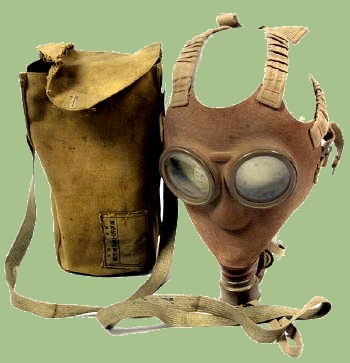
This week we're making masks, but we are more comfortable wearing masks than we'd care to admit. Human beings put on a mask every day. Call it a "persona" or "etiquette" but in some way we all present a different face to the world than that which we know to be true when we are alone.
The question here is why do people do this? Can we be authentic if we continually put on a different face for the outside world? Is it simply a matter of diplomacy? Am I taking all of this too seriously? Write me some answers to these questions as well as some examples of "masks" (metaphorical or no) that people wear.

First, the schedule for the week.
Tuesday: Making masks and practicing for the play. Remember to bring supplies to make your mask. I'll be taking a daily grade just to make sure everybody is contributing.
Wednesday: Practice, practice, practice. Wednesday is dedicated to finishing masks, finishing set pieces, backdrops etc. Remember the more creative the better. I'll also have copies of the play for everyone so that you can use it during the performances. When everyone is finished prepping for the performances, you'll write up the half page on the mask's symbolism.
Thursday: Today is performance day! Everyone will deliver their glorious theatrical experiences to the world.
Friday: Behind every lesson you get at school there is the underlying question of relevance. "Why are we learning this?" I have heard that (very fair) question thousands of times. This question becomes especially prescient when studying something like ancient Greek drama. Friday we will be watching Jessica Yu's film Protagonist. In this film four men's very different life experiences are juxtaposed against The Bacchae, with powerful and relevant effect.
BLOG POST FOR RESPONSE
This week we're making masks, but we are more comfortable wearing masks than we'd care to admit. Human beings put on a mask every day. Call it a "persona" or "etiquette" but in some way we all present a different face to the world than that which we know to be true when we are alone.
The question here is why do people do this? Can we be authentic if we continually put on a different face for the outside world? Is it simply a matter of diplomacy? Am I taking all of this too seriously? Write me some answers to these questions as well as some examples of "masks" (metaphorical or no) that people wear.
09 January 2011
Blog Post for the Week of 1/10 to 1/14
First off, great job on replying to the blog post this last week. It looks like a pretty good percentage of you got it posted by the deadline. I am sure that we'll all get this week's assignment in on time. You all rock!
This week we'll be beginning The Bacchae, in which a major theme is "transgression and punishment." My question for you this week relates to this theme and asks... what is the difference between justice and revenge? Who decides what is defined as just? Is this socially or culturally constructed, that is, are these definitions incumbent on the culture or society from which they emerge? This is due by midnight this coming Friday.

This week we'll be beginning The Bacchae, in which a major theme is "transgression and punishment." My question for you this week relates to this theme and asks... what is the difference between justice and revenge? Who decides what is defined as just? Is this socially or culturally constructed, that is, are these definitions incumbent on the culture or society from which they emerge? This is due by midnight this coming Friday.

04 January 2011
The question for the week regards...free will. I've already (or will, depending on when you read this) ask you how much control YOU FEEL YOU HAVE in your life, and I've already asked you (see above), but now I want to know some actual examples. Give me an example of an event that you believe was FATED to happen.


21 December 2010
For the new semester, first things first
I am posting a copy of the syllabus, so there's no excuses not to know what's going on. Also on Thursday of the first week back, you'll have a quick syllabus quiz.
Instructor Contact Information:
George Richard Odum
Rm: 252
Email: George.odum@austinisd.org
Course Website: http://odumgreatideas.wikispaces.com/
Course Blog: odumgreatideasblog.blogspot.com
Office Hours: Tuesday and Wednesday, 3:50-4:50 pm, and by appointment
Unit 1: Free Will/Determinism:
Major Work:
excerpts from Nietzsche’s The Birth of Tragedy
The Communist Manifesto, by Karl Marx
Mexican muralists Diego Rivera and Jose Clemente Orozco
Unit 2: Self/Other:
Major Work:
Florentine Renaissance art (Da Vinci, Michaelangelo, etc.)
Orientalism, by Edward Said
short stories by Gabriel Garcia Marquez and Julio Cortazar
Pather Panchali (The Little Road), by Satyajit Ray
Graceland, by Paul Simon
The Phaedrus, by Plato
“A Defense of Poetry,” by Percy Bysshe Shelley
romantic poetry, including the works of Wordsworth, Coleridge, etc.
Vertigo, by Alfred Hitchcock
The Marriage of Figaro, by Mozart OR
Tristan und Isolde, by Wagner
Field Trips:
Grading:
George Richard Odum
Rm: 252
Email: George.odum@austinisd.org
Course Website: http://odumgreatideas.wikispaces.com/
Course Blog: odumgreatideasblog.blogspot.com
Office Hours: Tuesday and Wednesday, 3:50-4:50 pm, and by appointment
Great Ideas: A Survey of the Humanities
Course Summary
The Course in Brief:
This course builds on the skills learned in freshman and sophomore year English and social studies classes, and guides students through writing full-length analyses and research papers.
We will consider a variety of works in the fields of literature, philosophy, history, psychology, art, architecture, anthropology, film, theater and music—areas of study known collectively as the humanities. Works will be considered in their historical contexts. However, this class will also connect thematic elements between texts of widely differing time periods and geographic regions in order to examine how peoples throughout history have thought about some of the fundamental experiences of human life.
Most of the works we will consider are “short”—examples include surrealist paintings, essays on Zen Buddhism, and South American short stories—but each unit also involves the intensive study of one longer work.
The course will culminate in a research paper and presentation which each student will complete individually.
Course Goals:
- to gain exposure to a wide variety of materials in all fields of the humanities, making connections and noting differences between these materials
- to practice and improve critical thinking and analysis skills
- to learn research skills, including locating information, incorporating research into papers, citing sources responsibly, and discriminating between reliable and unreliable sources of information
- to bolster essay writing skills, concentrating especially upon organization and thesis writing
Organization of the course:
In introduction to the “humanities” we will be structuring our inquiry into three core questions that have informed our conception of “humanity.” Each unit is intended to both explore a specific question in the humanities as well as provide a beginning position for the student to engage in critical inquiry.Unit 1: Free Will/Determinism:
Major Work:
The Bacchae/Bakkhai, by Euripedes
Other topics/ artifacts of study to include:excerpts from Nietzsche’s The Birth of Tragedy
excerpts from Genesis and The Koran
excerpts from the works of Jean Paul Sartre
readings in neuroscience
The Ego, the Id, and the Superego, by Sigmund Freud
the surrealist movement in painting, including the works of DaliThe Communist Manifesto, by Karl Marx
Mexican muralists Diego Rivera and Jose Clemente Orozco
Unit 2: Self/Other:
Major Work:
Heart of Darkness, by Joseph Conrad
Other topics/ artifacts of study to include:
Zen poetry by various authors
“The Ones Who Walk Away from Omelas,” by Ursula LeGuinFlorentine Renaissance art (Da Vinci, Michaelangelo, etc.)
Orientalism, by Edward Said
short stories by Gabriel Garcia Marquez and Julio Cortazar
Pather Panchali (The Little Road), by Satyajit Ray
Graceland, by Paul Simon
Unit 3: Beauty/Virtue:
Major Work: Due to the brevity of the fall semester, this unit will not feature a major work and will instead concentrate instead upon writing a research paper.
Other topics/ artifactss to include:The Phaedrus, by Plato
“A Defense of Poetry,” by Percy Bysshe Shelley
romantic poetry, including the works of Wordsworth, Coleridge, etc.
Vertigo, by Alfred Hitchcock
The Marriage of Figaro, by Mozart OR
Tristan und Isolde, by Wagner
Course Information:
Field Trips:
We will take two field trips as a class, both to the University of Texas campus. During the first unit of study, we will explore the Blanton Museum. At the end of our last unit of study, we will receive guided tours and classes at the Perry Castaneda Library, where students will have time to begin researching their final projects.
Final Project:The final weeks of the semester will be spent working on the research project that takes the place of a final exam for this course. Each student will choose a topic in the humanities that sheds light upon some aspect of our contemporary culture. Students will support their theses with evidence from a variety of disciplines in the humanities. As the culmination of this research, each student will produce a formal paper and, during finals week, explain the findings of this paper in a presentation to the class, accompanied by a visual aid or other example. To give some examples, previous papers have examined video games, popular novels, various genres in film, comic books, advertising, and a wide variety of other subjects.
You will be given time to begin your research during our field trip to the Perry Castaneda Library, as well as time in class to explore the school library and computer labs for useful information. However, in order to produce an exemplary project, you may need to continue your research in the UT library system or the public library system outside of class time, and will certainly need to devote a great deal of time to the project as a whole. This major project occupies most of the last six weeks of the semester.
Grading:
Student work will be graded according to English department policy, whereby different types of activities are weighted as follows:
- daily grades: 20%
- quizzes: 20%
- major assignments: 60%
For all major essays, you have the opportunity to work with the teacher in making significant revisions after your original essay has been graded. You will then receive the higher of the two grades. Revisions must, however, show significant effort and improvement in order to earn a higher grade.
Some assignments, such as weekly journals, are best judged as completion grades. Your completion grade begins at an 85, and alters depending upon the quality of your work throughout the six weeks grading period. At the end of the grading period, you will receive a “completion grade” which consists of a double daily grade (the equivalent of two daily grade assignments).
In the English department, discussion is part of the curriculum, and is necessary to the individual student’s learning as well as to the class atmosphere. Periodically, we will have formal graded discussions. However, all students are also expected to speak, take notes, address their peers respectfully, and listen actively during discussion every day, and grades will reflect such participation.
Except in cases of emergency outside of the student’s control, or rare cases in which the project merits such delivery (such as power point presentations), I will not accept electronic copies of assignments.
When a student has an EXCUSED absence from class on the day an assignment is given (in the case of daily grades), he or she receives a one day extension on this assignment. The student should nevertheless check with the teacher to confirm this extension, and write “absent,” along with the date of absence, on the top of the assignment when he or she turns it in. In the case of long-term assignments that the student receives before his or her absence, the assignment is due the day that the student returns to class.
Late Work Policy:Assignments are due at the beginning of class on the date specified. Late work will be accepted according to English department policy:
One day late: -10 pts.
Two days late: -20 pts.
Three days late: -30 pts.
After three days, assignments will be accepted only at the teacher’s prerogative. The maximum grade a student can receive in such a case is 50 out of 100. I will not accept late work after the grading period in which it is due has ended.
Important advice: Do not complete your work at the last minute possible, as I cannot accept printer failure (or any other computer-related malfunction) as an excuse. If you know that you will need to turn in work late, try to contact me before the due date. You are likely to turn in the assignment much more rapidly in this case than when maintaining silence about its existence, and potentially forgetting to complete it at all. Keep in mind, though, that nothing hurts your average the way that late work does.
12 December 2010
Change in Due Date for 1/2 Period
Because I have been sick all weekend and to make things a little more equitable I am pushing the due date for period 1/2 from Monday to Tuesday. We can talk further about Rough Drafts on Monday during the finals period.
11 December 2010
Hey,
I'm battling a massive migraine and chills so I'm going to look at these Rough drafts for 1/2 period tomorrow. 5/6 period we can talk about them Monday during class.
10 December 2010
Research Paper Rubric, Clarified and Final
Odum’s Great Ideas Research Paper Rubric
Student Name: __________________________
.
| Yes | No | Basic Requirement |
| | | 1. Paper typed |
| | | 2. Thesis clearly stated in intro and referenced in the conclusion |
| | | 3. Correct documentation style used in text |
| | | 4. Citing evident |
| | | 5. Minimum 8 sources |
| | | 6. Works Cited/Bibliography or References accurate and correctly formatted |
| | | 7. Paper written in 3rd person; content not personal essay but non-biased research |
| | | 8. Paper meets minimum length standard (7-10 pages, excluding title and Works Cited/Bibliography or References) |
| | | 9. Evidence of consistent and conscientious editing |
4—Clearly a knowledgeable, practiced, skilled pattern
3—Evidence of a developing pattern
2—Superficial, random, limited consistencies
1—Unacceptable skill application
Use of Sources
Skill application demonstrates use which represents à | 4 | 3 | 2 | 1 |
| Researched information appropriately documented | | | | |
| Enough outside information to clearly represent a research process | | | | |
| Demonstrates use of paraphrasing, direct, and indirect quotations | | | | |
| Information connects to the thesis | | | | |
| Sources on Works Cited/Bibliography or References accurately match sources cited within the text | | | | |
_______/20
Content/Organization
Skill application demonstrates use which represents à | 4 | 3 | 2 | 1 |
| Introduction engaging and clearly defines thesis | | | | |
| Thesis is challenging and focused | | | | |
| Content connecting to thesis is clarifying, exploring, explaining, developing | | | | |
| Text organization flows sensibly and smoothly | | | | |
| Mixture of personal voice interwoven with research (commentary) | | | | |
| Conclusion thoughtful, engaging, and clear | | | | |
_______/24
Mechanics/Usage/Spelling/Format
Skill application demonstrates use which represents à | 4 | 3 | 2 | 1 |
| Pagination (top right following last name) | | | | |
| 12 point Times New Roman font and appropriate margins | | | | |
| Usage/Grammar | | | | |
| Correct paragraphing | | | | |
| Written in formal style | | | | |
_______/20
Information Literacy
Skill application demonstrates use which represents à | 4 | 3 | 2 | 1 |
| Consistent Format (MLA) | | | | |
| Evidence of thorough research (sources represent variety and types) | | | | |
| Documentation demonstrates conscientious application of citing ethics | | | | |
| Evidence of sorting and selecting appropriate material | | | | |
| Evidence of importance of author’s credibility and validity | | | | |
| Research offers non-biased, fair research perspective from which a conclusion is drawn | | | | |
| Research information goes beyond surface information | | | | |
________/28
Comments on back.8 Points for Excellence and Creativity (as determined by the instructor)
Total Score: ________/100
Subscribe to:
Posts (Atom)